Practical Software Estimation Tips for Communicating with Business Leaders
How large is your project?
It’s projected to cost $2,000,000.
That’s cost. not size!
How large is your project?
We believe it will take 14 months to complete.
That’s schedule, not size!
How large is your project?
It’s going to be a 25-person project.
That’s staff, not size!
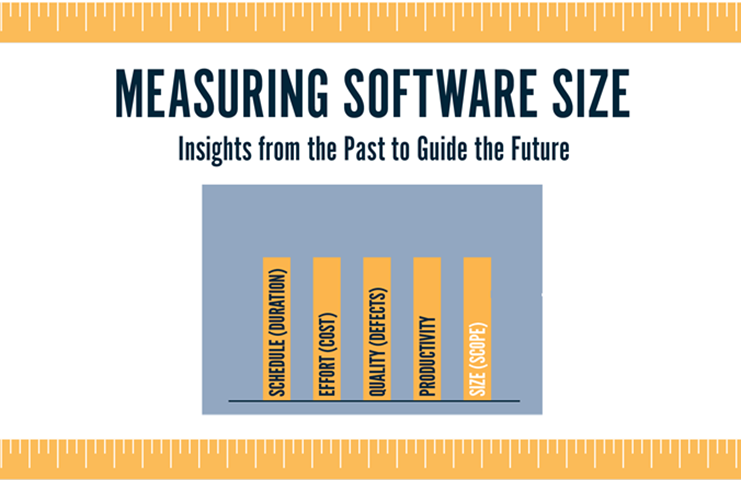
Software estimators often think of project size as what a project produces (features, stories, requirements, function points, or code). These are what a project has to create or account for in order to fulfill its mission. Business leaders, understandably, are more likely to visualize project size in terms of resources expended (cost, time to market, or FTE staff). These competing definitions of “size” can produce confusion and ambiguity. Which leads us to Tip #1.
Tip 1
Be prepared to explain to business leaders how quantifying project size (as seen by an estimator) helps business leaders get more accurate estimates of the things that matter to them: cost, schedule, quality, and staffing. I find a graphic like the one below from SLIM-Estimate can be useful to illustrate the relationship between a project’s size (primarily of interest to development staff and project managers) and the major project management metrics of interest to the C-suite.