Agile Estimation: Beyond the Myths, Part 1 Webinar Replay and Q&A Highlights
Our recent webinar, Agile Estimation: Beyond the Myths, Part 1, presented by Andy Berner, featured a lively Q&A session. Here are a few of the highlights that you can catch in the PDU-approved replay.
Q: You talked about different types of work and how they're done concurrently. What about the work of developing the system architecture?
A: How architecture is determined in agile projects is a really interesting question. Grady Booch, who is one of the great proponents of software architecture used to say that the biggest difference of opinion between him and Kent Beck, who is thought of as the inventor of agile, was the extent to which architecture is planned versus evolved. So there's controversy, but I think all agile methodologists would agree that some basic architecture constraints are an input to the coding work, and thus we would consider that as part of "getting to ready," and also agree that some detailed architecture decisions evolve along with the detailed design as part of “getting to done.” So it's split. The more complex the project, the more likely you’ll need strong architectural input that was part of "getting to ready" and should plan more architectural effort as part of the "getting to ready" portion.
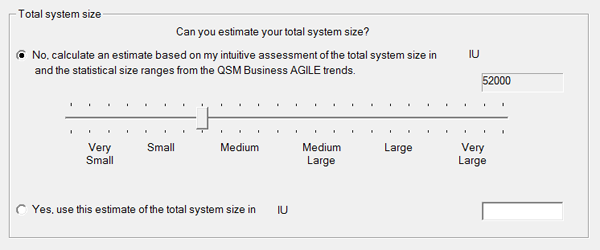
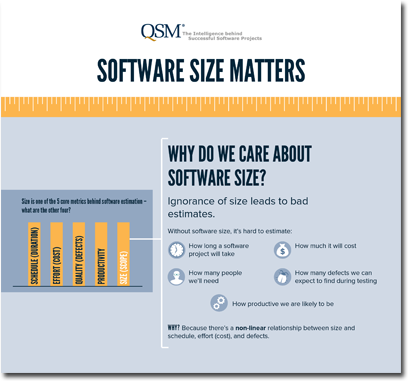
Q: Can you create an agile estimate using function points as an input?
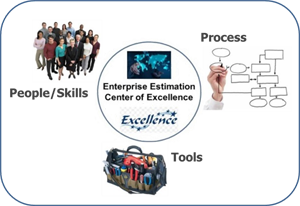 People – Finding people with the right characteristics and developing their skills;
 There is an old adage that if your only tool is a hammer, everything looks like a nail. We use the lessons learned and experience we have gained to address current issues. But if the problem (or software project) we face today is fundamentally different from those we’ve dealt with previously, past experience isn’t the proper framework. In effect, we will be using a hammer when a saw or a chisel might be the tools we need.